

Heat, light and time: what breaks a fragrance down
Does cologne expire? Yes, but slowly, and the bottle does not go off all at once. Heat, light and air break a fragrance down from the top: the alcohol and the bright opening notes go first, the liquid darkens, and eventually the whole thing smells sour or flat. Keep it cool, dark and closed and most bottles outlast your interest in them.
What actually breaks a fragrance down?
Three things, and they work together.
Heat speeds up every reaction in the bottle. The volatile parts of the scent escape faster, and the fragrance oils start reacting with each other and with whatever air is inside. A bottle left on a sunny windowsill or in a car ages faster than the same bottle in a drawer.
Light, sunlight above all, does a similar job by a different route. It breaks down the fragrance molecules themselves, which is why clear bottles on open shelves fade and darken quicker than bottles kept in their boxes.
Air is the third. Every spray lets a little air in to replace the liquid that left, and oxygen slowly changes what is left behind. A nearly empty bottle holds far more air than liquid, so the last few sprays are often the ones that have drifted furthest from the original.
Time is only the measure of how long those three have had to work. A bottle in a cool, dark, closed box can sit for years and still be fine. The same bottle on a bathroom shelf, through steam, heat and light every morning, will not.
Does cologne expire in ways you can see and smell?
Use your eyes first, then your nose.
- The liquid has gone noticeably darker or more orange than it was, or something has settled at the bottom.
- The opening smells sharp in the wrong way: vinegar, nail polish, something metallic, instead of the citrus or spice you remember.
- The top notes have simply gone. You spray and the scent starts in the middle, with none of the bright first moment.
- It fades far faster on skin than it used to, even on a good day.
Fresh, citrus-led scents show their age first because citrus notes are the most fragile. Deep, resinous or woody scents, the oud and amber end of the shelf, tend to hold up longer and sometimes round out with age. If your fresh bottle smells thin and your woody one still smells like itself, that is the normal pattern rather than bad luck.
How do you slow it down?
- Keep the box. Cardboard blocks light, and a bottle in its box in a drawer is about as good as home storage gets.
- Keep it out of the bathroom. Steam, heat swings and a window are the worst combination you own.
- Keep it out of the car. A glovebox in summer is an oven.
- Keep the cap on and spray rather than splash, so less air gets in.
- Buy the size you will finish. A huge bottle of a fresh scent you wear twice a month spends most of its life aging.
Does a scented body butter break down the same way?
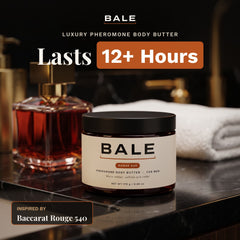
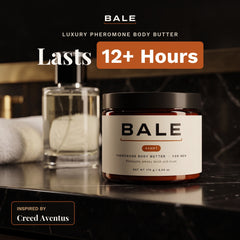
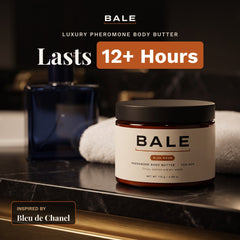
Partly. There is no alcohol in a body butter, so there is no flash-off and no top-note burst to lose. The scent sits in a base of shea and cocoa butter, and the base is the part that reacts to heat, in a way you can see rather than smell.
Butter softens in heat. A jar left in a hot car or by a sunny window goes soft, and if it gets soft enough it can settle unevenly when it cools. It is not spoiled. Put it in the fridge and it firms back up, which is also the answer if a jar arrives soft in summer shipping. What you want to avoid is the repeated cycle, soft every afternoon and firm every night, because that is what changes the texture over time.
Light does less to a jar than to a bottle, because the amber glass and the butter itself shade the fragrance, but there is no reason to test it. Lid on, out of the sun, somewhere that stays roughly room temperature. A bedroom drawer beats the bathroom cabinet. The storage guide has the full routine for home and travel.
Keep your fingers dry when you scoop. Water in the jar is the one thing that can genuinely shorten its life, and it is the easiest to avoid.
Should you throw out an old cologne?
Not on age alone. Spray it on paper first, and if the opening smells like it used to, wear it. If the opening has turned but the drydown is fine, you can still wear it on days when nobody is getting close, and buy the fresh bottle for the nights that matter. If it smells of vinegar all the way through, it is done, and no amount of spraying over it will help.
The same test works for a jar. Open it, smell it, look at the surface. If it smells like the scent you bought and the texture is even, use it.
Quick answers
Does cologne expire?
Yes, slowly. Heat, light and air break it down, starting with the alcohol and the bright top notes. A bottle kept in its box, in a cool drawer with the cap on, can last for years; one on a sunny bathroom shelf will not.
How can I tell if my cologne has gone bad?
The liquid is darker than it was, the opening smells of vinegar or nail polish instead of the notes you remember, or the top notes have vanished and it starts in the middle. Fresh citrus scents show it first; woody and resinous ones hold up longest.
Where should I store cologne?
In its box, in a drawer or closet that stays cool, out of sunlight and away from the shower. Never the bathroom windowsill and never the car.
What do I do if my body butter melts?
Put the jar in the fridge and it firms back up. Butter softens in heat, so keep it out of a hot car and away from the sun, keep the lid on and keep your fingers dry when you scoop.
If you are starting from scratch, the beginner's guide to fragrance families explains why the fresh scents fade first and the warm ones hang on, and the article on testing a cologne on skin covers what to smell for. Every Bale scent ships in amber glass with the lid on tight, which is most of the storage problem solved before it reaches you.


